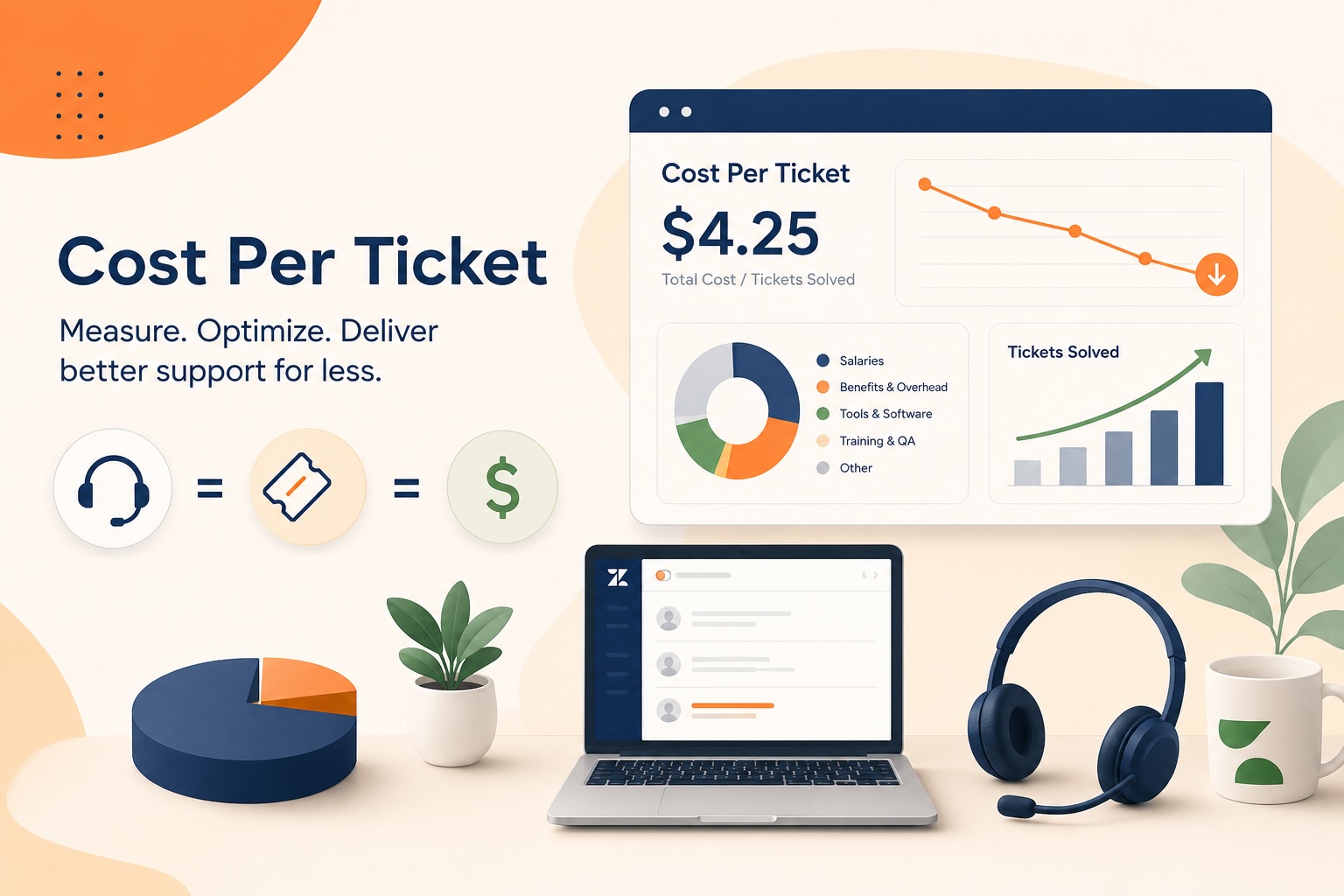
Customer support leaders are under constant pressure to do more with less. As ticket volumes increase and customer expectations rise, understanding the true cost of delivering support becomes critical. One of the most valuable metrics for measuring support efficiency is Cost Per Ticket (CPT).
For organizations using Zendesk, tracking and optimizing Cost Per Ticket provides a clearer picture of operational performance and helps identify opportunities to improve both efficiency and customer experience.
In this article, we’ll explore what Cost Per Ticket is, how to calculate it, and practical ways to reduce it using Zendesk.
What Is Cost Per Ticket?
Cost Per Ticket measures the average amount your organization spends to resolve a single customer support interaction.
This metric helps answer questions like:
- How efficiently is our support team operating?
- Are we scaling support costs appropriately as volume grows?
- Where are our biggest opportunities for improvement?
A lower CPT doesn't necessarily mean better support. The goal is to strike the right balance between cost efficiency and delivering excellent customer experiences.
How to Calculate Cost Per Ticket
The formula is simple:
Cost Per Ticket = Total Support Costs ÷ Number of Tickets Resolved
Example
Suppose your monthly support costs include:
Agent salaries -$30,000
Benefits and overhead - $8,000
Zendesk licenses and tools - $2,000
Training and QA expenses - $1,000
Total Costs = $41,000
If your team resolved 10,250 tickets during the month:
$41,000 ÷ 10,250 = $4.00 per ticket
This means each customer interaction costs approximately $4 to resolve.
Why Cost Per Ticket Matters
Tracking CPT helps organizations:
- Measure Operational Efficiency
- Understanding support costs allows leaders to benchmark performance and monitor trends over time.
- Forecast Staffing Needs
- As ticket volume changes, Cost Per Ticket can help predict hiring requirements and budget more accurately.
- Identify Process Bottlenecks
- High costs often reveal inefficiencies such as:
- Manual workflows
- Repetitive tasks
- Poor ticket routing
- Excessive escalations
- Long resolution times
- High costs often reveal inefficiencies such as:
- Demonstrate Support ROI
- Support teams are often viewed as cost centers. Cost Per Ticket provides data that helps justify investments in automation, self-service, and agent enablement.
Factors That Influence Cost Per Ticket
Several variables impact this metric:
- Ticket Complexity
- Simple password resets cost far less than technical troubleshooting or multi-touch cases.
- Channel Mix
- Phone support typically costs more than email, chat, messaging, or self-service.
- Agent Productivity
- Teams with faster response and resolution times generally have lower support costs.
- Automation Adoption
- Automated workflows and AI-powered tools reduce manual effort and allow agents to focus on higher-value interactions.
- Self-Service Effectiveness
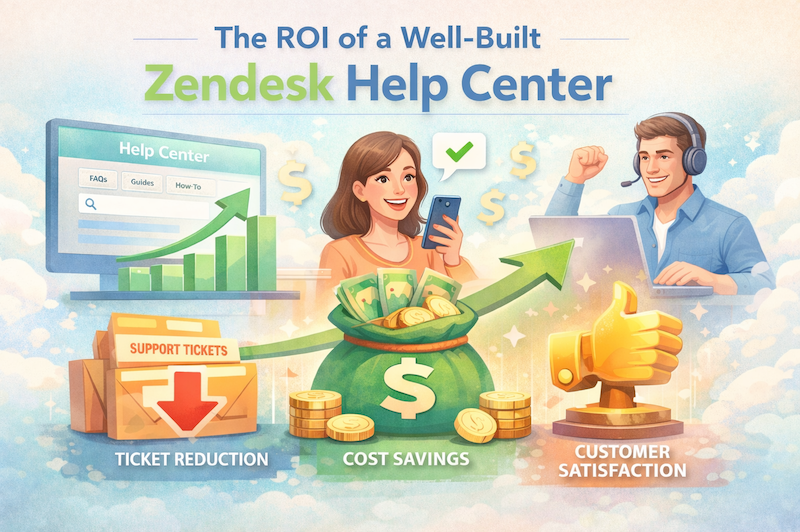
- Knowledge bases and help centers can deflect repetitive requests before they ever reach an agent.
7 Ways to Reduce Cost Per Ticket in Zendesk
Reducing CPT isn't about cutting corners, it’s about eliminating inefficiencies and empowering customers and agents.
1. Expand Self-Service Capabilities
Customers increasingly prefer solving simple issues themselves.
Zendesk Guide enables organizations to:
- Build searchable knowledge bases
- Create FAQs and help articles
- Surface suggested articles before ticket submission
Every ticket avoided lowers overall support costs while improving customer satisfaction.
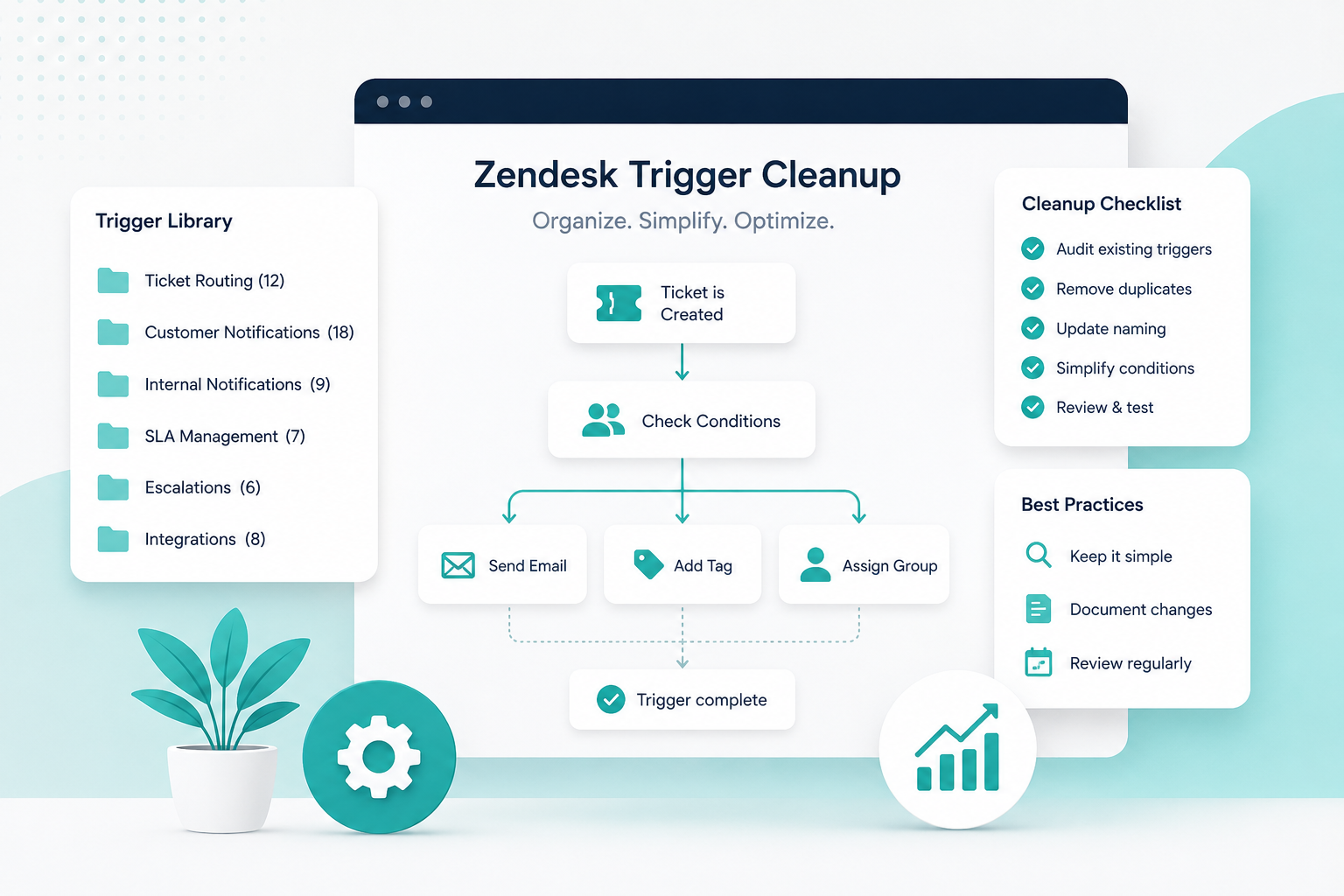
2. Automate Repetitive Work
Manual processes consume valuable agent time.
Use Zendesk:
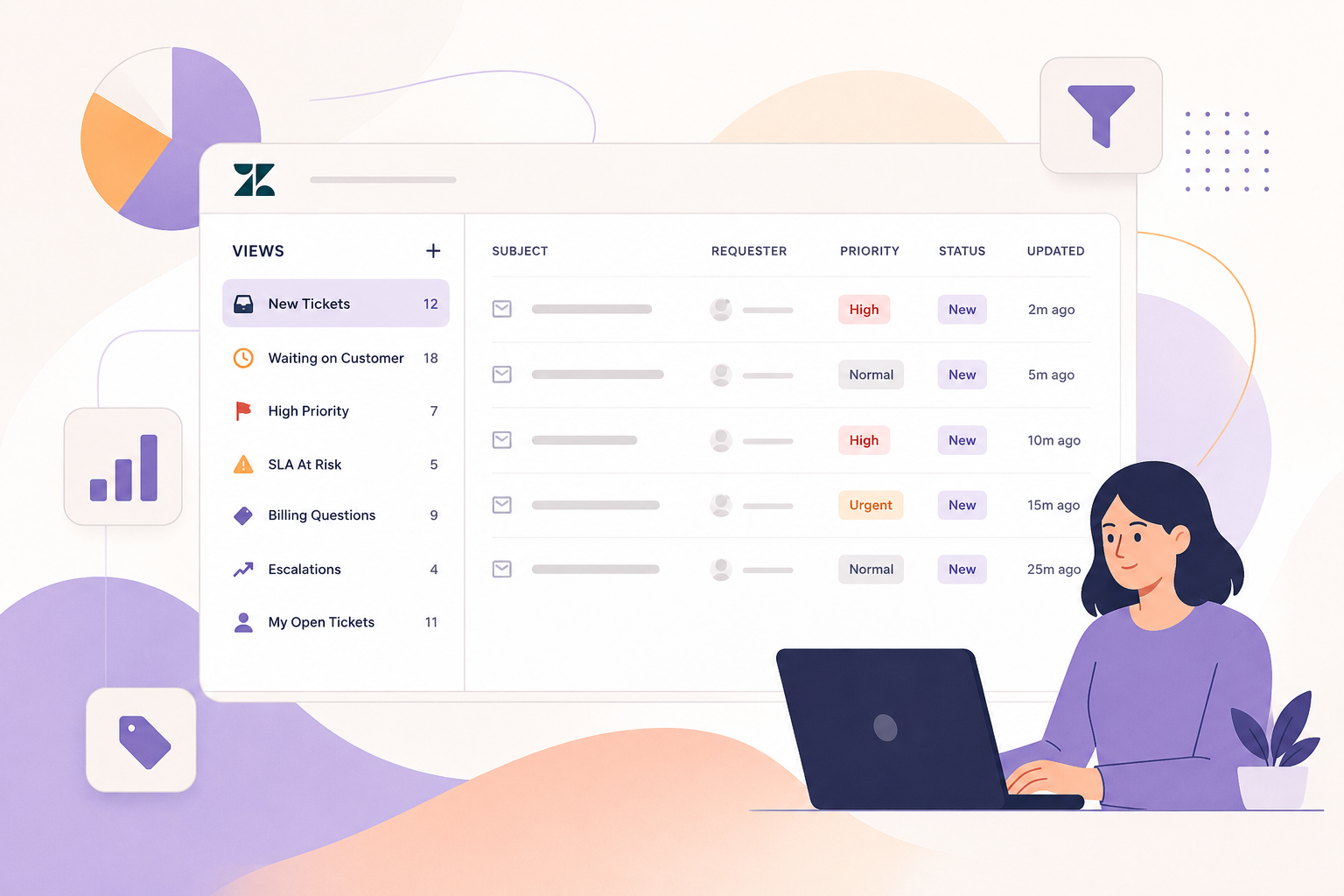
- Triggers
- Automations
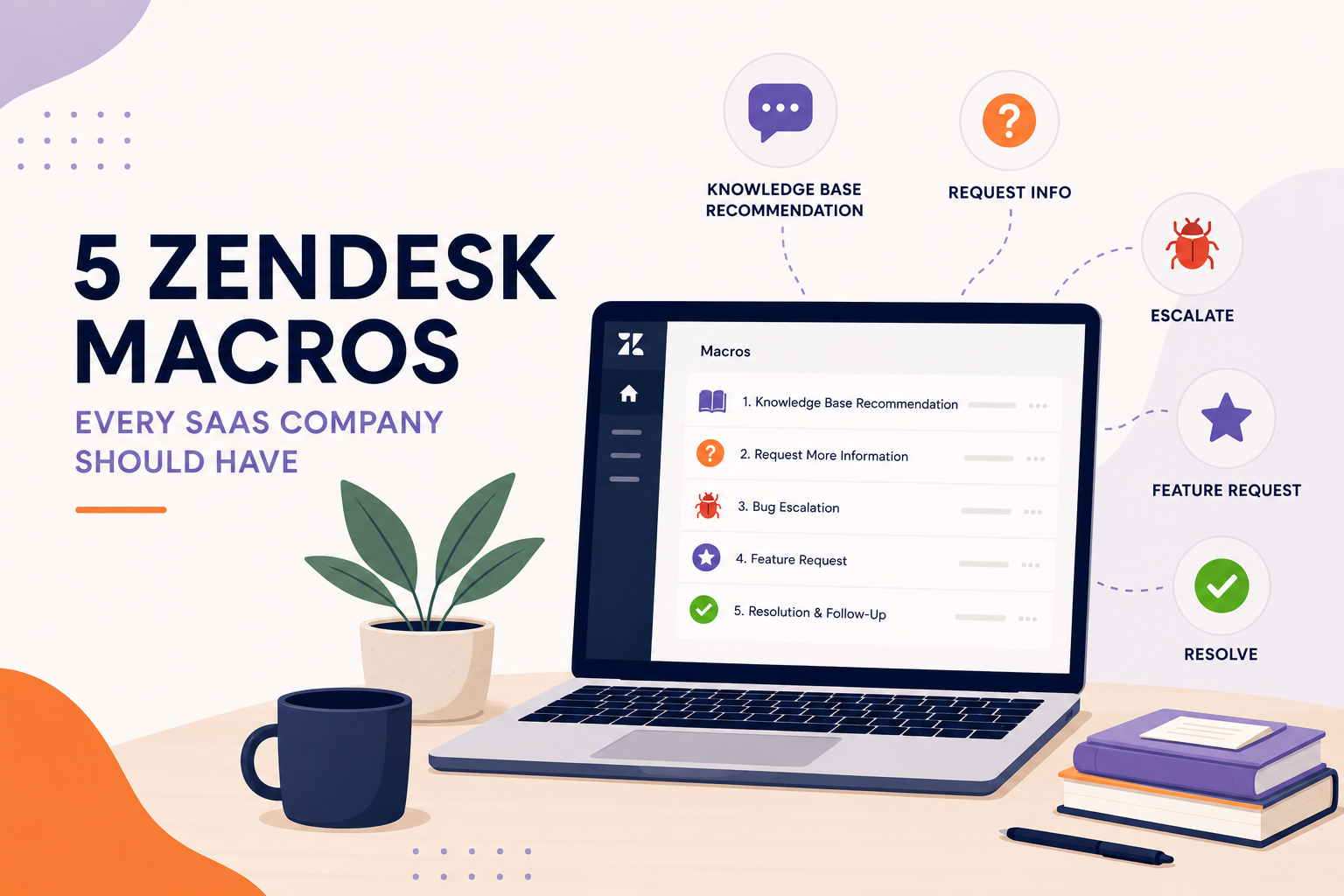
- Macros
- Views
to automate:
- Ticket assignments
- Status updates
- Escalations
- Follow-up notifications
- Standard responses
Automation allows agents to spend more time solving problems and less time performing administrative tasks.
3. Improve Ticket Routing
Misrouted tickets lead to unnecessary transfers and increased handle times.
Zendesk skills-based routing and intelligent assignment can:
- Send tickets directly to the right team
- Reduce internal handoffs
- Improve first-contact resolution
- Shorten resolution times
Better routing means lower operational costs and happier customers.
4. Leverage AI and Agent Assist
AI tools can significantly reduce effort per interaction.
Zendesk AI capabilities help by:
- Suggesting responses
- Recommending knowledge articles
- Summarizing conversations
- Classifying tickets automatically
These features improve agent productivity without sacrificing quality.
5. Measure and Optimize Agent Performance
Use Zendesk Explore to track:
- First response time
- Resolution time
- Reopen rates
- Ticket backlog
- Agent workload
Data-driven coaching and process improvements often lead to higher efficiency and lower Cost Per Ticket.
6. Identify Top Contact Drivers
Not all ticket volume should be accepted as inevitable.
Analyze your most common issues:
- Shipping questions
- Password resets
- Billing inquiries
- Product setup requests
Then address root causes through:
- Better documentation
- Product improvements
- Proactive communication
- Workflow changes
The cheapest ticket is the one that never needs to be created.
7. Adopt an Omnichannel Strategy
Customers expect flexibility.
By managing email, chat, messaging, and social channels from a single workspace, Zendesk helps teams:
- Maintain context across channels
- Avoid duplicate work
- Improve agent productivity
- Deliver consistent experiences
This unified approach helps support organizations scale efficiently.
Metrics to Track Alongside Cost Per Ticket
Cost Per Ticket becomes even more valuable when viewed alongside:
- Customer Satisfaction (CSAT)
- First Contact Resolution (FCR)
- Average Resolution Time
- Ticket Volume
- Agent Utilization
- Backlog Size
- Self-Service Deflection Rate
Looking at these metrics together provides a more complete picture of support health and performance.
Final Thoughts
Cost Per Ticket is one of the most important metrics for evaluating the efficiency of a support organization. However, reducing costs should never come at the expense of customer experience.
The most successful teams focus on:
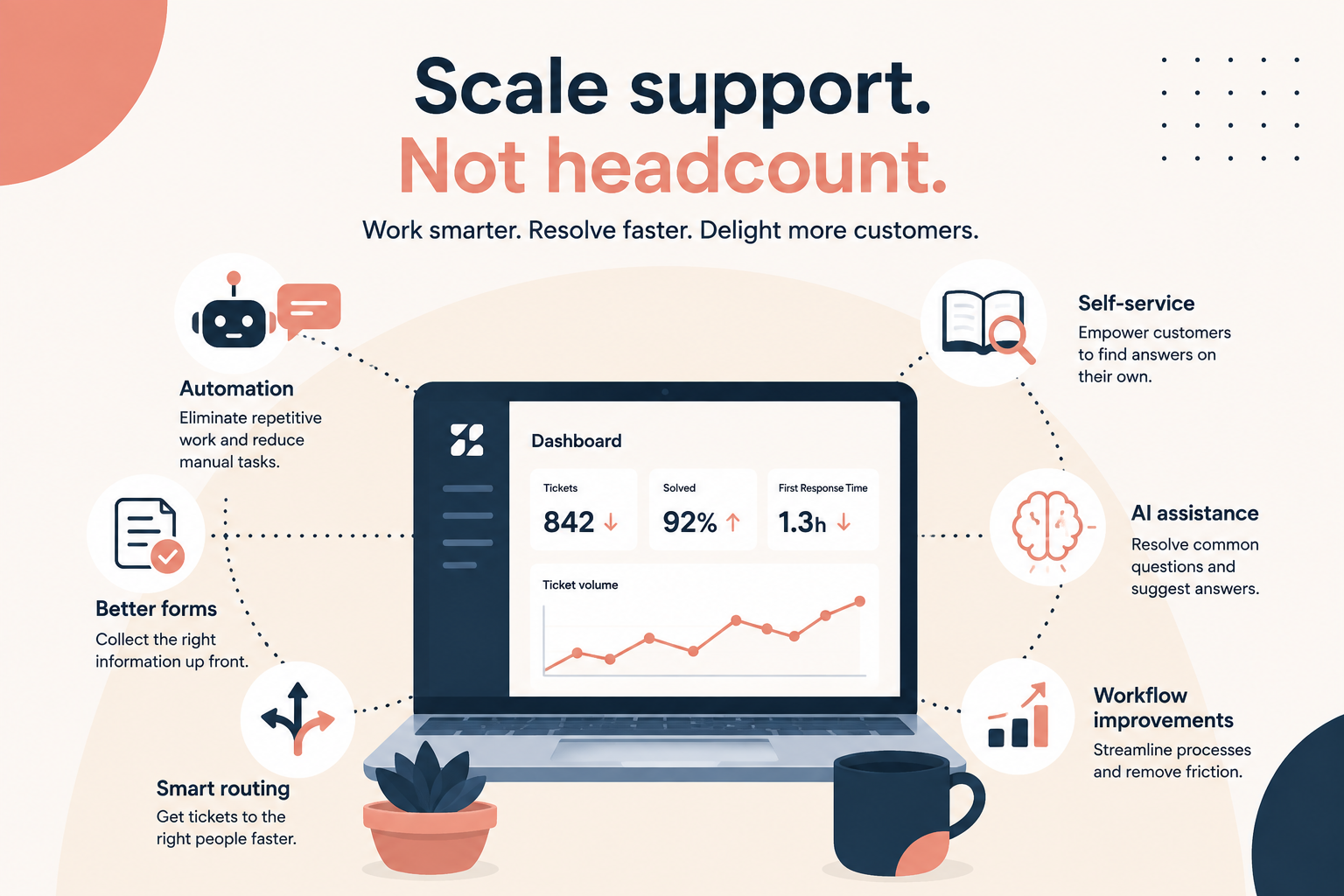
- Automation
- Intelligent routing
- Self-service
- AI-powered assistance
- Continuous process improvement
With the right Zendesk strategy, organizations can lower operational costs while delivering faster, more personalized support experiences.
At SupportPie, we help organizations optimize Zendesk to improve efficiency, reduce support costs, and create exceptional customer experiences. Whether you're just beginning to measure Cost Per Ticket or looking to take your support operations to the next level, our team can help you unlock the full value of Zendesk.